
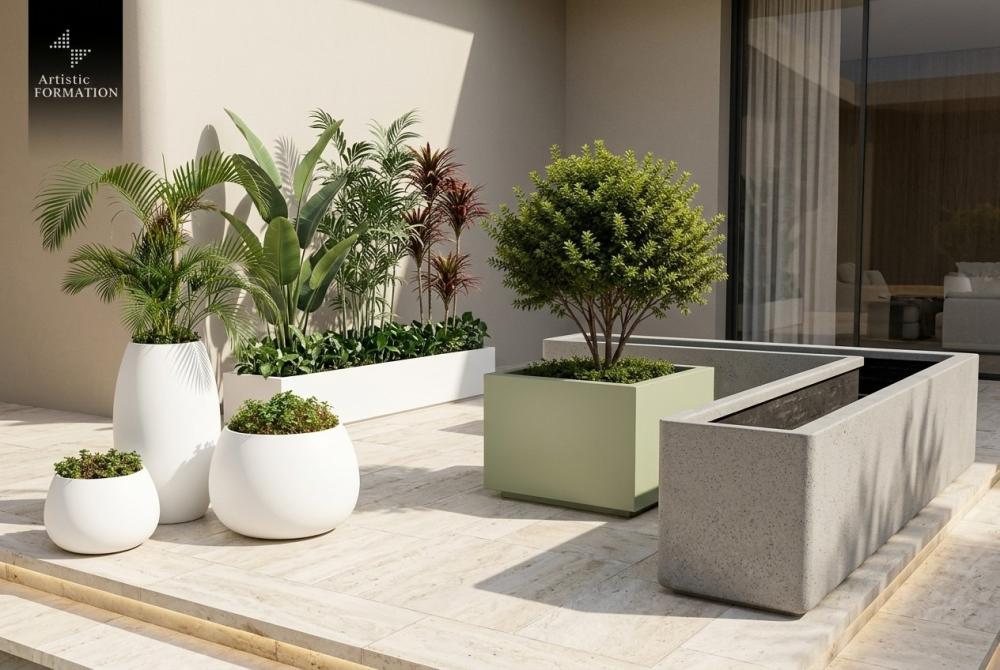
Custom-made planters offer the opportunity to transform both indoor and outdoor spaces into more beautiful and organized areas, especially when the planters are designed to suit the site's dimensions and the types of plants used. Choosing the right planter involves more than just color and shape; it also includes dimensions, material, finish, and how well the design suits the intended use. With the wide variety of planter sizes and shapes available, ready-made planters may not be sufficient for all homes or commercial projects. Therefore, fiberglass offers significant flexibility in creating custom designs, allowing for a choice of size, color, and finish.
In this article, we review the most important things you need to know before customizing planters, and how to choose a design that suits your design and needs.
When do you need to have custom-made planting pots instead of ready-made ones?
You need to have planters custom-made when ready-made ones don't fit the dimensions of the space or the design and plant requirements. Custom-made plants are a suitable option in the following cases:
Irregular spaces: such as narrow corners or spaces with special dimensions.
• Commercial projects: When there is a need for uniform basins that match the identity and design of the project.
• Custom designs: If you are looking for a specific shape, color, or finish.
Large plants: when plant roots require greater depth or width.
• Coordination of outdoor spaces: to distribute basins according to the plan of the garden, walkways, or building entrances.
Al-Tashkeel Al-Fanni is considered the best fiberglass factory in Saudi Arabia , which provides the possibility of manufacturing fiberglass agricultural basins according to the required sizes and designs, in a way that suits the nature of each project and its needs.
What is the difference between standard and custom-sized planting pots?
Standard planting containers are manufactured to predetermined dimensions, while custom containers are made according to the client's requirements and the available space. The difference between them is evident in several aspects:
• Standard sizes: Suitable for typical spaces, and often available in specific shapes and sizes.
• Custom sizes: Allows specifying the length, width and height to suit the location.
• Design flexibility: Custom sizes offer greater freedom in choosing shape, color, and finish.
• Cost and execution time: Custom-made basins may require more time and different costs depending on the complexity of the design, material, and dimensions.
• Suitability for the project: Custom-designed basins help achieve more precise distribution, especially in commercial projects or spaces with a special layout.
How do you determine the appropriate planter sizes for your space before ordering?
To determine the appropriate dimensions for custom-made planters, consider the available space, the type of plants, and how the planters will be arranged before starting manufacturing. You can follow these steps:
• Measure the space: Determine the available length, width and height, leaving sufficient space for movement and maintenance.
• Determine the type of plants: Consider the size of the roots and growth needs, as large plants may need deeper and wider pots.
• Choosing the location of the sink: Make sure the size is suitable for entrances, hallways, balconies or seating areas.
• Consider the proportions: Ensure a balance between the height and width of the basin and the length of the surrounding space.
• Determine the number of basins: Calculate the distance between each basin, especially when using them to determine paths or divide areas.
• Review the design before implementation: Share measurements, photos, or a plan with the manufacturer before designing planting beds to reduce the chances of error.
What is the difference between pot sizes? Small plants and large pot sizes?
The choice of plant pot size varies depending on the plant's size, root growth rate, and the space the pot will occupy. The main differences can be summarized as follows:
• Small pots: suitable for small plants and seedlings, and are usually used on tables, windowsills and in limited spaces.
• Medium-sized pots: suitable for plants that need more space to grow, and can be used in homes, offices, and entrances.
Large basins: suitable for trees, shrubs, and plants with spreading roots, and are suitable for gardens, entrances, and commercial spaces.
The Artistic Forming Factory manufactures fiberglass agricultural basins in various sizes and designs, with the possibility of customizing the dimensions to suit the type of plant and the available space.
Do the sizes of standard plastic planters differ from the sizes of custom fiberglass ones?
Yes, standard plastic planter sizes may differ from custom fiberglass planters in terms of flexibility in determining dimensions and design:
• Standard plastic basins: These are available in predefined sizes, making them suitable for normal spaces, but they may not be suitable for sites with special dimensions.
Custom fiberglass planting basins: allow for determining the length, width, and height according to space and design requirements.
• Variety of shapes and finishes: Different designs can be made from fiberglass, with the appropriate color and finish chosen.
• Commercial use: Custom sizes help to standardize basins to suit the design of hotels, restaurants and commercial projects.
What details should be specified in the design before ordering custom-made planting basins?
Before ordering custom-made planters, it is important to specify the following details to ensure the final product is compatible with the intended use and design:
• Dimensions: Length, width, and height, with the appropriate thickness determined according to size and use.
• Shape: round, rectangular, square, oval or special design.
• Plant type: To determine the appropriate depth and internal space for the roots.
• Color: Choose a specific color or provide the desired color number.
• Exterior finish: such as matte, glossy, or any decorative finish available.
• Place of use: Indoor or outdoor, taking into account the conditions surrounding the basin.
Drainage openings: Determining the need for drainage openings and their locations in a way that suits the nature of agriculture.
• Number and method of distribution: especially when implementing basins for a commercial project or a large area.
How do you choose the right shape: round, rectangular, or large?
The choice of pond shape depends on the site space, the type of plants, and the nature of the desired design, and not just on appearance.
• Round basin : Suitable for entrances, seating areas and spaces that require a streamlined look, and can be used as a focal point in coordination.
• Rectangular basin : Suitable for corridors, walls and long spaces, and also helps in organizing plants and defining boundaries between areas.
• Large basin : Suitable for trees, shrubs, or large areas, with the need to ensure the appropriate depth, weight, and location.
The art workshop offers custom-made fiberglass planters in various shapes and sizes, helping to coordinate spaces according to the desired design. It also provides a ready-made range of round, rectangular, and large planters in diverse designs.
Can planters be custom-made in a specific color with a color number?
Yes, it is possible to request the execution of planting basins in a custom color by color number, and to obtain a result closer to the desired color, it is recommended to specify the following:
• The approved color number or color system.
• The desired level of shine, such as matte or glossy.
• A reference image or color sample, if available.
• The nature of the lighting and the location where the aquarium is used, because the color may appear different between indoor lighting and sunlight.
• The suitability of the color to the material and the final finish.
The art form factory provides options for implementing designs and customizing colors and finishes of fiberglass basins according to project specifications.
How does the design of planting pots differ depending on whether it is for home or commercial use?
The design of planting beds varies depending on the location, the size of the space, the number of beds required, and the desired level of harmony in the design. The main differences can be summarized as follows:
• Home use: often focuses on the suitability of the basin to the balcony, garden or entrance space, choosing a size and shape that match the decor and the number of plants.
• Commercial use: Requires consideration of the project's identity, and consistency of the basins in terms of sizes and colors, and may require manufacturing large quantities according to standardized specifications.
The Artistic Forming Factory provides custom fiberglass basins for homes and commercial projects, with the possibility of specifying sizes, colors and designs according to the required needs.
What do you need to send to the factory before starting to manufacture agricultural basins?
Sending accurate information to the factory before custom-made planters helps minimize manufacturing errors and ensures the planters fit the space and design. Key details include:
· Required dimensions: Specify length, width, and height, indicating whether the dimensions are external or internal.
• Site photos or plans: to show the available space, surrounding obstacles, and the location of the basins.
• Reference design: Sending a picture or drawing that illustrates the desired shape, especially in non-traditional designs.
• Type of plants: List the plants expected to be planted in order to determine the appropriate dimensions and depth.
• Color and color number: Specify the desired color, and attach a sample or reference where needed.
Finishing: Clarifying the desired final appearance, such as matte or glossy, depending on the available options.
• Number of basins: Specify the required quantity, indicating whether all pieces are the same size.
• Place of use: Indicate whether the basins are for indoor or outdoor use.
• Delivery date and transportation requirements: Discuss the expected schedule and method of delivering the basins, especially when large quantities are requested.
What factors affect the cost of custom-made planters?
The cost of custom-made planters is affected by several key factors, including:
• Dimensions and size: The larger the dimensions or the more complex the geometric proportions, the higher the quantity of raw materials and the implementation requirements may be.
• Shape and design: Simple designs differ in cost from curved shapes or special geometric details.
• Type of finish: The cost may vary depending on the color, gloss level, and decorative details required.
Quantity: The cost per piece may differ when ordering a single basin compared to ordering a large set.
• Thickness and manufacturing requirements: These are determined according to the size of the basin, the nature of the use, and the agreed technical specifications.
Drainage openings and additions: Any additional openings or details can affect manufacturing time and requirements.
• Transportation and delivery: Additional costs may apply related to the delivery location, the size of the tanks, and the method of transportation.
• Special modifications: Frequent modifications or complex designs may increase the final cost.
To obtain an accurate price quote, it is preferable to send the dimensions, design, color, quantity, and delivery location to the factory, so that the cost can be determined according to the required specifications.
How long does it take to build custom-sized planting basins?
The time required to create custom planters varies depending on several factors; therefore, there is no fixed timeframe for all orders. The duration can be affected by the following factors:
• Simplicity of design: Implementing basins with ordinary shapes may be easier than complex geometric designs.
• Size of basins: Large basins require different manufacturing and processing requirements than small pots.
• Quantity required: Large commercial orders may take longer to fulfill.
• Special modifications: such as custom colors, finishes, drainage openings or additional details.
• Design approval: Agreeing on final dimensions and specifications early helps reduce delays.
Common mistakes when ordering custom-sized or designed planters
Some mistakes made when ordering custom-made planters can lead to choosing planters unsuitable for the space, plants, or intended use. Some of the most common mistakes to avoid include:
• Inaccurate measurement of the area: Relying on approximate estimates may result in the basin being unsuitable for the location.
• Ignoring root size: Choosing a small pot for a large plant may limit its growth and affect its stability.
• Failure to specify internal and external dimensions: Confusion between them leads to a difference in the area available for cultivation.
• Neglecting drainage openings: Water drainage should be discussed in a manner appropriate to the type of plant and the method of cultivation.
• Choosing a color without a sample or reference: The final color tone may vary depending on the material, lighting, and finish.
• Failure to consider the final weight: The weight of the container should be estimated after adding soil, water and plant, especially when placing it on balconies or roofs.
• Failure to specify the place of use: The requirements for basins placed outdoors differ from those used inside buildings.
The art shaping factory helps you review the specifications of fiberglass basins before manufacturing, thus reducing errors and bringing the result closer to the desired design.
How do I order custom-made planters for my project or home?
To obtain suitable basins for your home or project, follow these steps:
1. Determine the purpose of use: Are the basins intended for a home garden, building entrance, restaurant, hotel, or commercial project?
2. Specify the area and dimensions: Send the exact measurements of the site, indicating the space available for movement and maintenance.
3. Choose the right shape: Decide whether you need round, rectangular, square or special design basins.
4. Specify the type of plants: List the types of plants or their expected sizes to determine the depth and interior space.
5. Choose the color and finish: Send the color number or reference image, and specify the desired final look.
6. Send photos and diagrams: Site photos and reference drawings help to illustrate the required details.
7. Specify the quantity and date: Specify the number of basins and the target delivery date.
8. Request a clear price quote: Make sure the quote includes dimensions, material, finish, alterations, and shipping if applicable.
9. Finalize specifications: Review the design, dimensions, and color before manufacturing begins.
The Artistic Forming Factory provides the possibility of implementing the best fiberglass agricultural basins according to the requirements of homes and commercial projects, with customization of sizes, shapes and colors according to the agreed design.
If you have a specific size or design in mind, contact the Artistic Forming Factory team to have it executed to the specifications that best suit your needs with precision and the highest quality.
Frequently Asked Questions
What are the dimensions of a planting pot?
Plant pot sizes vary depending on the type of plant and the available space, including length, width, and height. Custom sizes can be chosen when a pot is needed that fits precisely in a specific location.
What are the best planting pots?
Fiberglass is a suitable material for agricultural basins thanks to its flexibility in manufacturing and the possibility of implementing various shapes, sizes, colors and finishes.
What are the prices of planting pots?
Prices for planting pots vary according to size, shape, type of finish, quantity, and manufacturing requirements.
Can agricultural basins be custom-made to specific dimensions?
Yes, we can manufacture planters in custom sizes to suit the dimensions of the space, the type of plants, and the required design, with the possibility of customizing the shape, color, and finish.
Are fiberglass baths suitable for outdoor use?
Fiberglass basins can be used in outdoor spaces, taking into account the quality of manufacturing and finishing, the environmental conditions to which the basin will be exposed, and choosing the appropriate sizes for the plant and its location.