
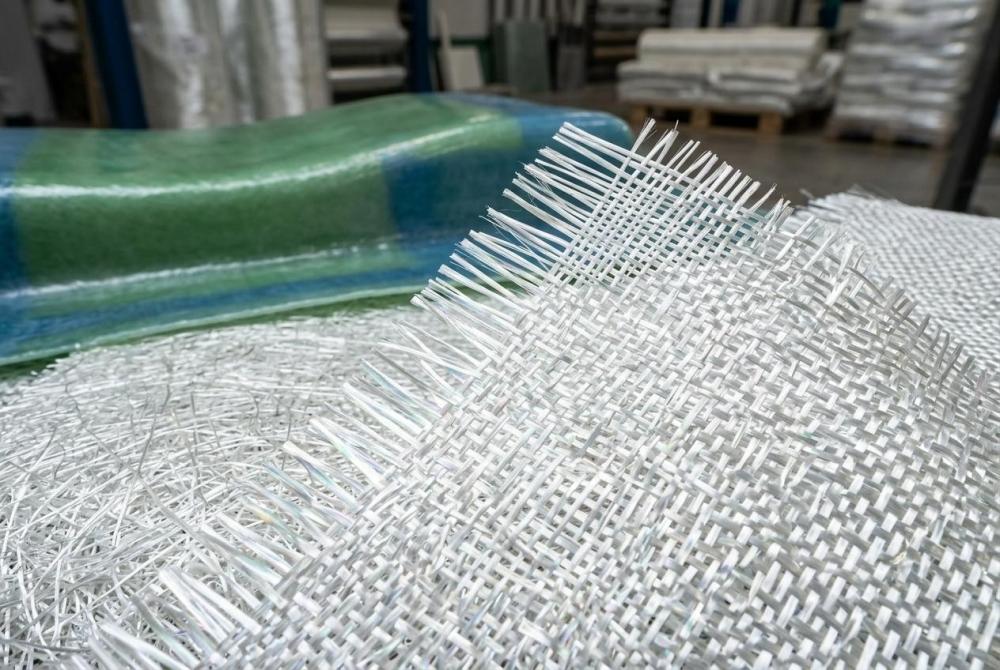
Fiberglass possesses numerous properties that have made it a popular material in many industrial and decorative products. Its specific characteristics vary depending on the type of fiber and resin used, as well as the manufacturing process. Therefore, understanding its properties helps determine its suitability for each application. Whether you're looking for a material for landscaping, designing fountains and waterfalls, or creating custom-sized decorative pieces, knowing fiberglass's properties provides a better basis for comparing materials and choosing the right product.
In this article, we review the most prominent characteristics of fiberglass, its advantages and disadvantages, its resistance to heat and weather conditions, how to care for it and choose the appropriate products from it.
What are the characteristics of fiberglass that distinguish it from other materials?
The importance of fiberglass stems from its being a composite material that combines glass fibers and resin, giving it a range of properties that make it suitable for diverse applications. Among these properties are:
● Lightweight: It is lighter than concrete and natural stone in many applications, making it easier to transport and install the products.
● Formability: It can be manufactured in various geometric and curved shapes, in accordance with the required design.
● Corrosion resistance: It does not rust like iron, and can resist moisture and many chemical agents when the appropriate formulation is chosen.
● Variety of finishes: It can be produced in different colors and textures to meet aesthetic requirements.
● Customization capability: Products can be manufactured in special sizes and designs instead of being limited to standard sizes.
What are the main advantages of fiberglass for outdoor use?
Fiberglass is used in gardens, entrances, and outdoor spaces thanks to its flexible design and the ability to choose specifications that suit the site conditions. Its most prominent advantages are evident in several aspects:
● Moisture resistance: It does not rust like metals, but its water resistance depends on the type of resin, the quality of manufacturing, and the integrity of the finish.
● Design variety: Thanks to the properties of fiberglass, it can be shaped into planters, fountains, and waterfalls Decorative pieces in different sizes.
● Easy to transport and install: Its relatively light weight helps in handling large products compared to some heavier alternatives.
● Variety of colors: Colors and finishes can be chosen to match the design of gardens and buildings.
● Suitable for long-term use: It can maintain its performance for a good period when the right material is chosen and protected from environmental factors.
To coordinate outdoor spaces with products that are compatible with the nature of the place, the Artistic Forming Factory allows the implementation of plant basins, fountains and waterfalls according to the required sizes and designs, with the selection of appropriate finishes for the intended use.
Is fiberglass truly heat resistant?
The properties of fiberglass allow it to withstand certain temperatures, but it is not resistant to all temperatures or non-combustible. Its thermal resistance depends on:
● Type of resin used.
● The composition of the material.
● Duration of exposure to heat.
● The nature of the surrounding circumstances.
Why is choosing lightweight fiberglass a practical option?
Lightweight construction is one of fiberglass's most prominent characteristics and practical advantages, especially when manufacturing large products or parts that need to be transported and installed in different locations. The importance of this property is evident in several aspects:
● Easy to transport and handle: The weight is relatively low compared to similar products made of concrete or natural stone, making them easier to move and handle.
● Installation flexibility: Lighter products may be easier to place within entrances, gardens and commercial spaces, taking into account installation requirements.
● Reduce support loads: Less weight can help reduce the load on the surface or mounting base, but the load-bearing capacity should be assessed according to site conditions.
● Greater freedom in design: The malleability combined with the lightweight design allows for the implementation of customized designs in various sizes and shapes.
● Suitability for customized projects: These features make it easier to deal with products that are manufactured to specific dimensions to fit the available spaces.
These advantages are particularly evident in agricultural basins. Large decorative elements, fountains and waterfalls, where weight can be a significant factor in transportation and installation.
What are the advantages of fiberglass compared to natural stone?
Fiberglass differs from natural stone in weight, design flexibility, and installation requirements, making each material suitable for specific applications. The following table illustrates the key differences between them:
Fiberglass
natural stone
the weight
Lighter weight, making it easier to transport and install.
It is heavier and may require additional equipment for transport and installation.
Design flexibility
It can be shaped into various curves, details, and decorations.
Its shaping possibilities are determined by the nature of the stone and the methods of cutting and carving.
Colors and finishes
It offers a variety of colors and finishes.
It features natural colors and veining that vary depending on the type of stone.
Allocation
It can be manufactured in custom sizes and shapes to suit the required space.
It's a little more difficult to cut and shape.
Maintenance
It depends on the type of resin, the finish, and the conditions of use.
It depends on the type of stone, its porosity, and its exposure to moisture and weather conditions.
Installation requirements
It is easier to handle and install thanks to its light weight.
It needs suitable mounting and support equipment due to its weight.
The choice between the two materials depends on the nature of the project, the budget, and the requirements for durability and final appearance. Thanks to its properties, fiberglass offers greater flexibility in terms of shaping and finishing.
How does fiberglass resist moisture and weather conditions?
Fiberglass can resist moisture and weathering when manufactured using a suitable formulation and finish appropriate to its intended use. Its durability depends on several factors:
● Resin type: Affects resistance to moisture, water and chemicals.
● Manufacturing quality: The integrity of the layers and the treatment help to reduce the likelihood of defects that could allow water to leak.
● Exterior finish: May provide additional protection from UV rays and environmental factors.
● Maintenance: Checking for cracks and damage and treating them early helps to prolong the life of the product.
Can fiberglass withstand harsh climatic changes?
Some fiberglass products can withstand external climatic conditions, but their ability to resist extreme heat, cold, and temperature fluctuations depends on:
● Properties of fiberglass.
● Type of resin and fiber.
● The nature of the finishing.
● Manufacturing quality.
The art form factory helps to produce products customized for outdoor spaces according to the project’s needs, specifying the appropriate design, dimensions, and finishes.
How durable is fiberglass compared to metals?
The durability of fiberglass differs from that of metals depending on the material type, design, and load requirements. Thanks to its properties, fiberglass offers a good strength-to-weight ratio and does not rust like iron, but it is not a suitable alternative to metal in all applications. The main differences are outlined below:
● Strength-to-weight ratio: Fiberglass may offer good strength relative to its weight, making it suitable for some products that require lightweight construction.
● Corrosion resistance: It does not rust, but its resistance to chemicals and different environments depends on the type of resin.
● Impact resistance: Impact and bending resistance vary depending on the product's composition, thickness, and manufacturing method.
● Heat resistance: Some fiberglass products may be more affected by high heat than some metals, so operating limits should be taken into account.
Therefore, the choice depends on the job required, and not on a general comparison that assumes one of the two materials is superior in all aspects.
How do the properties of fiberglass affect the lifespan of the product?
The properties of fiberglass affect how long a product retains its shape and efficiency, but its lifespan depends not only on the type of material, but also on:
● Manufacturing quality: The distribution of fibers, the type of resin, and the manufacturing method all affect the product's durability and resistance to damage.
● Usage conditions: Products placed outdoors may be exposed to direct sunlight, rain, and temperature changes, making the selection of the appropriate finish important.
● Maintenance and cleaning: Proper cleaning and regular inspection help detect damage early and limit its aggravation.
● Design suitability: Choosing the appropriate thickness and shape for the nature of the use helps reduce the likelihood of cracking or deformation.
Does fiberglass require regular maintenance?
Thanks to its properties, fiberglass typically doesn't require complicated maintenance, but regular care helps preserve its appearance and extend its lifespan. To maintain fiberglass products, the following steps are recommended:
● Regular cleaning: Use a soft cloth and water with a mild detergent, and avoid abrasive materials that may scratch the surface.
● Surface inspection: Pay attention to the appearance of cracks, peeling, or discoloration, especially in products exposed to sunlight and weather conditions.
● Avoid harsh chemicals: Some strong solvents and detergents may affect the resin or outer layer.
● Address damage early: If cracks or damaged areas appear, it is better to assess and repair them appropriately rather than ignore them.
● Follow the instructions for use: The method of care varies according to the product design and the finish used, so refer to the manufacturer’s instructions where available.
What are the potential disadvantages of fiberglass?
Despite its advantages and characteristics, fiberglass does have some limitations that should be considered before choosing the product. Among the most prominent potential drawbacks are:
● The product may crack or break when it collides with solid objects or is subjected to loads that exceed its load-bearing capacity.
● Some surfaces may change color or the finishing layers may deteriorate with prolonged exposure to sunlight if they are not suitable for outdoor use.
● Not all types of fiberglass have the same thermal resistance, and thermal resistance does not necessarily mean fire resistance.
● Minerals or natural stone may be more suitable for some uses that require specific structural properties or a natural appearance.
Therefore, it is not enough to rely on the name of the material alone when purchasing; rather, the quality of the product, its specifications, and its compatibility with the conditions of use should be evaluated.
The Artistic Forming Factory offers high-quality decorative fiberglass pieces , with the possibility of customizing sizes, shapes, and finishes to suit the project requirements.
How do the features of fiberglass help you choose your next product?
Choosing the right fiberglass product depends on first identifying your needs, and then comparing the material's properties with the requirements of the actual use.
The features that make it suitable for customizing planting basins , waterfalls, fountains, or decorative pieces may differ in importance from the characteristics required in a product that is constantly exposed to water or sunlight.
If you are looking for planters, fountains, waterfalls, or decorative pieces with specifications that suit your space, you can use Al-Tashkeel Al-Fanni, the best fiberglass factory in Saudi Arabia , to implement customized designs and take advantage of the properties of fiberglass.
Contact the Artistic Forming Factory now to explore options for custom-designed planters, fountains, waterfalls and decorative pieces, and choose shapes, colors and finishes that match your space and aspirations.
Frequently Asked Questions
What is fiberglass used for?
Fiberglass is used in the manufacture of planting basins, fountains, waterfalls and decorative pieces, as well as various industrial and construction applications, thanks to its light weight and malleability.
Is fiberglass breakable?
Yes, it may crack or break when subjected to strong shocks or loads that exceed its load-bearing capacity, and its resistance varies depending on the quality of manufacturing, thickness, and composition.
Is fiberglass heat resistant?
Its ability to withstand heat varies depending on the type of resin and the composition of the product, so it is not assumed to be fire-resistant or resistant to all temperatures.
Does fiberglass require continuous maintenance?
It does not usually require complicated maintenance thanks to the properties of fiberglass; it is sufficient to clean it with gentle materials and inspect it periodically to detect cracks or surface damage.