
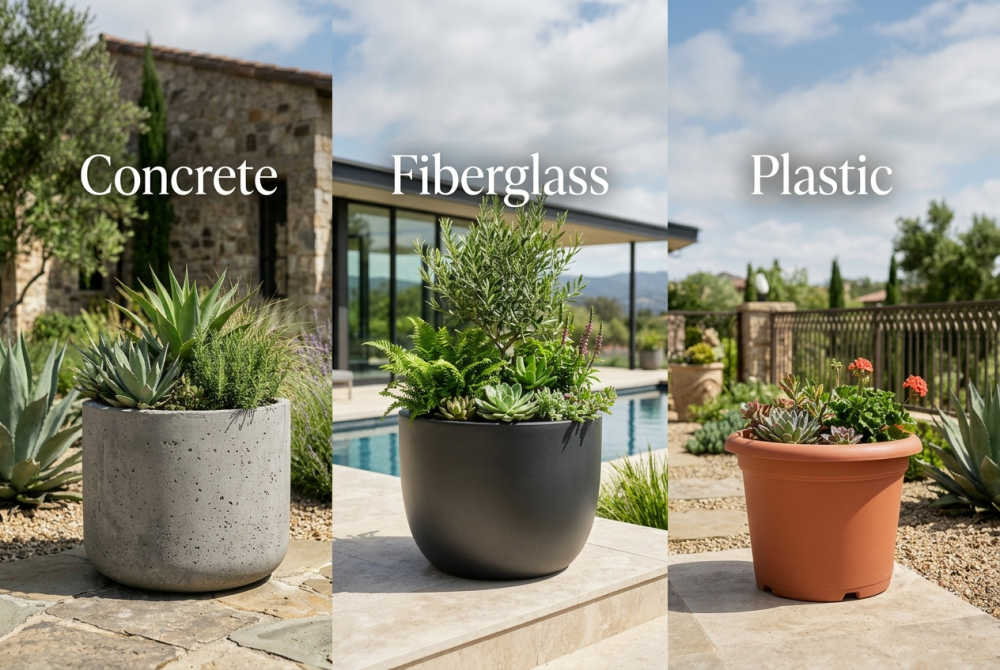
Plastic planters are a popular choice in many projects thanks to their low cost and easy availability, while some turn to concrete or cement pots for their sturdiness. However, these options may not always be the best fit for projects seeking a professional look, a long lifespan, and flexibility in design and execution. This is where fiberglass planters stand out as an alternative that combines durability, light weight, and the ability to be manufactured in the required sizes and colors, making them an ideal choice for both residential and commercial projects.
In this article, we go over the differences between these materials to help you choose the solution that suits your project's needs.
What Is the Difference Between Fiberglass, Concrete, and Plastic Planters?
Each type of planter has its own characteristics that make it suitable for certain uses, so the choice depends on the nature of the project, the desired appearance, and the length of use.
This is whyfiberglass planters are considered a balanced choice that combines durability, ease of use, and design flexibility, making them suitable for both residential and commercial projects.
How Does Planter Weight Vary Depending on the Material?
The weight of the planter directly affects how easily it can be moved, installed, and redistributed within the site, especially in projects that require flexibility in execution. Therefore, we find that:
- Choosing cement pots for planting is characterized by their heavy weight, making it harder to move or relocate them, and this may require additional equipment or labor.
- Choosing plastic planters is lightweight, but they may not provide the durability required in some long-term applications.
- As for planters made of fiberglass, they combine lightness and durability, making them easy to transport and install without affecting the product's strength or lifespan.
For this reason, despite the widespread use of plastic and cement planters, many project owners now prefer to use fiberglass in locations that need ease of installation while maintaining product quality.
Which Is Easier to Move and Install: Fiberglass or Concrete?
When comparing the two types, fiberglass planters clearly outperform in terms of ease of transport and installation, thanks to their lighter weight compared to cement.
Among the most notable advantages of fiberglass planters:
- Easy to move within the project site.
- Reduces the time needed for installation.
- Lowers transport and labor costs.
- Ability to redistribute or relocate them when needed.
- Reduces the load on surfaces or balconies compared to concrete planters.
On the other hand, cement planters require greater effort in transport and installation due to their weight, which may increase time and cost, especially in large projects.
For this reason,Artistic Formation factory offers fiberglass planters made to a high standard of quality, combining durability and light weight, with the ability to manufacture them according to the sizes and designs that suit different projects, making it a trustedfiberglass factory in Saudi Arabia.
How Does Sun Exposure Affect Outdoor Planters?
Outdoor planters are exposed to sunlight and high temperatures on a daily basis, so the choice of the material they are made from directly affects their lifespan and appearance over time.
High heat may lead to:
- Discoloration of some low-quality materials.
- The appearance of cracks or deformities as a result of expansion and contraction.
- Weakening of the planter's durability over time.
- Increased need for maintenance or replacement.
For this reason, it is recommended to choose materials designed to withstand harsh weather conditions, while avoiding the use of plastic plant pots or cement pots in outdoor projects that require long-term use.
How Well Do Fiberglass Planters Hold Up Outdoors?
Fiberglass planters are considered one of the most suitable options for outdoor use, thanks to their properties that combine durability, light weight, and weather resistance. Among their most notable advantages:
- Resistance to moisture and rain.
- Withstands high temperatures.
- Maintains its shape and finish for long periods.
- Resistance to wear caused by outdoor use.
- Easy to clean and maintain.
Artistic Formation offers fiberglass planters made from high-quality materials, with the ability to produce them in the required sizes and colors to suit gardens, hotels, commercial complexes, and residential projects.
Do Plastic Planters Hold Up Well Over Long Periods of Use?
Plastic planters can be suitable for simple or temporary uses, but their durability varies depending on the quality of the material they are made from.
With continuous use in outdoor spaces, some types may face:
- A change in color as a result of sun exposure.
- A decrease in durability over time.
- The possibility of cracking or warping when exposed to harsh conditions.
- Limited design and size options compared to custom manufacturing.
Therefore, in projects that require a longer lifespan and a more professional appearance, many customers prefer not to use a plastic plant pot and to replace it with fiberglass planters.
When Are Concrete Planters a Good Fit for Outdoor Projects?
Concrete planters can be a suitable choice in certain cases that require great stability and no need to move the planters after installation. These planters are usually suitable for:
- Large public squares.
- Sites that need permanent fixing.
- Projects that rely on a classic architectural style.
- Places where heavy weight is not a challenge.
However, if the project needs flexibility in transport, custom designs, or a variety of colors and finishes, then fiberglass planters offer greater advantages, which is why they are the preferred choice for many designers and project owners looking for solutions that combine durability, ease of installation, and modern design.
How Does Fiberglass Durability Compare to Concrete and Plastic?
When comparing plastic planters, concrete ones, and fiberglass ones, durability does not depend on the strength of the material alone, but also includes its ability to withstand weather conditions and maintain its shape and quality over time.
When choosing between the three materials, keep in mind that:
- Fiberglass planters: combine durability and light weight, and resist moisture, sunlight, and wear, while maintaining their appearance for long periods.
- Cement planters: are characterized by high hardness, but they may be more prone to cracking as a result of impacts or temperature changes over time, and are also difficult to move due to their weight.
- Plastic planters: offer light weight and ease of use, however their durability varies depending on manufacturing quality, and they may not be the best option for projects requiring long-term use.
This is why fiberglass planters are considered a balanced choice for projects seeking durability, a modern appearance, and ease of installation all at once.
Which Materials Are More Prone to Cracking or Losing Shape Over Time?
The lifespan of a planter is affected by the type of material, the quality of its manufacturing, and the nature of its use. In general:
- Some low-quality plastic planters may become deformed or lose their color when continuously exposed to sunlight and high temperatures.
- Cracks may appear in some cement pots for planting as a result of impacts or the expansion and contraction caused by temperature changes.
- As for high-quality fiberglass, it is characterized by greater shape stability and good resistance to weather conditions, which helps it maintain its performance and appearance for long periods.
How Does Planter Weight Affect Shipping and Delivery Costs?
The weight of the planter is one of the factors that affects transport costs, especially when ordering large quantities or supplying products to different project sites.
Choosing large plastic planters or heavy cement planters may lead to:
- Increased shipping costs.
- The need for additional equipment or labor during transport and installation.
- A longer time needed to carry out supply work.
On the other hand, thanks to their lighter weight, fiberglass planters help reduce transport costs and are easier to handle, which gives project owners greater flexibility, especially in commercial projects that involve a large number of planters.
What Is the Cost Difference Between a Cheaper Planter and a Longer-Lasting One?
A ready-made planter may seem less costly when purchased, but it is not always the most economical choice in the long run, especially if it needs to be replaced or maintained after a short period.
As for custom planters made from high-quality fiberglass, they may be a better investment because they offer:
- A longer lifespan.
- Higher resistance to weather conditions.
- Reduced need for maintenance or replacement.
- The ability to manufacture them in the sizes and colors suited to the project.
- A professional appearance that maintains its quality over time.
For this reason, when evaluating cost, it is better to look at the overall value of the product throughout its period of use, rather than just the initial purchase price.
Artistic Formation offers fiberglass products that combine high quality, a long lifespan, and the ability to manufacture to order, giving customers better investment value for various types of projects.
How Do You Choose the Right Planter Material for Where It Will Be Used?
Choosing the right material depends on the nature of the site, the environmental conditions, and the project's requirements, not just the appearance or price. The following can serve as guidance:
- For home gardens: it is preferable to choose planters that combine durability, aesthetic appearance, and ease of transport, such as fiberglass planters.
- For entrances and commercial spaces: products that can withstand continuous use and offer the ability to produce custom sizes and colors are recommended.
- For rooftops and balconies: it is preferable to use lightweight planters to reduce the load on the building.
- For fixed locations that do not require frequent moving: concrete planters may be a suitable choice in some cases.
This is why studying the nature of use before buying plastic planters, cement pots, or even fiberglass ones helps in choosing the product that offers the best performance in the long run.
What Is the Best Option for Gardens, Entrances, and Commercial Spaces?
These spaces need planters that combine durability, a professional appearance, and ease of installation, along with the ability to withstand outdoor conditions for long periods.
Fiberglass planters offer many advantages that make them suitable for these uses, including:
- The ability to manufacture them in sizes that suit each project.
- A wide variety of colors and finishes.
- Light weight compared to concrete.
- Good resistance to weather conditions.
- A modern appearance that blends with various architectural designs.
Artistic Formation is considered thebest fiberglass factory in Saudi Arabia, specializing in manufacturing and executingcustom fiberglass planters that meet the needs of gardens, hotels, restaurants, commercial complexes, and villas, with each project carried out according to its own specifications.
When Is a Plastic or Concrete Planter Still a Reasonable Choice?
Each type has its own uses that may make it suitable under certain conditions.
Plastic planters may be suitable when:
- The use is temporary.
- The budget is limited.
- There is a need to move the planter constantly.
As for the cement planter, it may be a suitable choice if:
- The planter needs to be fixed permanently.
- Weight is not a challenge.
- The project relies on a traditional architectural style.
However, if the project requires customplanter designs, a more elegant appearance, and flexibility in sizes and colors, then fiberglass planters offer greater advantages that meet these requirements.
How Do You Choose Between Fiberglass, Concrete, and Plastic for Your Project?
The final decision depends on the nature of the project and the priority you are looking for, whether it is durability, weight, design flexibility, or long-term cost.
If you are looking for:
- The highest flexibility in design and sizes,fiberglass is the best choice.
- Permanent stability and heavy weight, then a cement planter may be suitable.
- An economical solution for simple or temporary uses, then plastic planters may serve the purpose.
However, for commercial and residential projects that require high quality, a professional appearance, and the ability to manufacture to order, fiberglass planters offer the best balance between performance, durability, ease of installation, and design.
Artistic Formation offers custom solutions that suit various projects, executing the best planting pots according to the sizes, colors, and finishes that achieve the highest value and quality in the long run.
If you would like to invest in high-quality planters that last a long time and suit the nature of your project, browse the fiberglass planters from Artistic Formation and choose the specifications that suit you.
And if you have a specific design with particular dimensions, you cancontact the Artistic Formation team and request the execution ofcustom designs for your project, and it will be carried out according to your request with the highest quality standards.
FAQs
What is the difference between plastic planters and fiberglass planters?
Fiberglass planters are characterized by higher durability and better resistance to weather conditions, with the ability to manufacture them in custom sizes and designs, while plastic pots are considered an economical option for simple or temporary uses.
What are the advantages of fiberglass planting pots?
Fiberglass planters combine light weight, durability, and resistance to moisture and sunlight, with the ability to produce them in colors, sizes, and finishes that suit different projects.
Which is better, a cement planter or a fiberglass one?
It depends on the nature of use, but fiberglass is considered the better choice for projects that need custom design, ease of transport, and a modern appearance.
Can fiberglass planters withstand outdoor use?
Yes, they are designed to withstand moisture, high temperatures, and weather conditions, making them suitable for gardens, villas, and commercial projects.
Can fiberglass planters be manufactured to the required sizes?
Yes, fiberglass planters can be produced in various sizes, shapes, and colors to suit the requirements of each project, whether residential or commercial.